
From 31 October, small Dartford schemes are decided by officers however many neighbours object, and the committee shrinks to 13. Councillors vote 12 October.
From 31 October, objecting to a neighbour’s extension in Dartford will no longer be able to send it to councillors for a decision. New national rules take that power away, whatever the number of objections.
Dartford’s councillors are being asked on Monday 12 October to rewrite the council’s planning rules to fit. The changes are set out in a report to the General Assembly of the Council, the full council meeting (Dartford Borough Council, report to the meeting of 12 October 2026).
The new rules come from the Town and Country Planning (Discharge of Local Planning Authority Functions) (England) Regulations 2026. They come into force on 31 October 2026 and apply to every council in England.
What changes in Dartford
The report asks councillors to agree that:
- the Development Control Board is renamed the Planning Committee from 1 November
- it shrinks from 17 members to 13: nine Conservative, three Labour and one Reform
- a ward councillor can no longer insist that an application goes to the committee
- the number of objections no longer decides whether a case goes to committee
- any councillor who wants to comment on an application must do so in writing, and the comment is published like a resident’s
The government’s regulations cap a planning committee at 13. Its guidance says eight to 11 is the best size for informed debate, according to the report.
Two kinds of application
The rules sort applications into two groups.
Schedule 1 applications must be decided by officers. They include:
- householder applications, such as extensions, loft conversions and outbuildings
- minor residential schemes of one to nine homes on a site under half a hectare
- minor commercial applications, such as some shopfronts
Today, Dartford sends one of these to the board when more than five written objections raising planning issues come in against a recommendation to approve. That route ends on 31 October. The council’s own comparison table calls this “a significant change” for small housing schemes, “as many of these types of applications for more than one dwelling attract representations from the local community” (Appendix E).
Schedule 2 covers everything else, including major developments. These are also decided by officers unless two people agree the case should go to committee: the chair of the Planning Committee and the council’s nominated planning officer. They must also agree that the scheme raises an issue “of significance to the local area”, or “a significant planning matter”. The government calls this the “Gateway Test”.
If the two cannot agree, officers decide the application.
How Dartford plans to sift the bigger cases
To avoid holding a Gateway Test on every Schedule 2 application, the council proposes a triage. Only Schedule 2 cases that meet one of these tests would be discussed for referral:
- major development not identified in the Local Plan
- major development in the Green Belt
- six or more representations against the officer’s recommendation
- a councillor’s request that it be considered
- anything the nominated officer thinks raises significant issues
Meeting one of those tests does not send a case to committee. It only means the chair and the officer must discuss it. Their decision, and the reasons, must be recorded and published on the council’s website, with a report to the committee at least every three months, the report says.
A councillor who wants a case considered must set out the reasons in writing, tied to the two statutory tests. The request has to arrive before the consultation period on the application ends (triage note, Appendix F).
The council’s weekly list of new applications will say whether each one is Schedule 1 or Schedule 2, so you can see from the start which route it is on.
Most decisions were already made by officers
The change is smaller in Dartford than the headlines suggest. The report says 98.7% of planning decisions in 2025/26 were made by officers under delegated powers. That figure includes tree works, adverts and conditions.
The board has mostly been hearing the larger and more contested schemes. Under the new rules, a committee that decides a case it should have left to officers risks the decision being quashed by judicial review, the report warns.
Public speaking stays, for fewer cases
You can still speak at the committee, but only on applications that reach its agenda. The updated protocol keeps the current rules (Appendix C):
| Rule | What it says |
|---|---|
| Who can speak | Anyone who commented in writing on the application, plus the applicant, agent or landowner |
| How many | One speaker for the recommendation and one against, first come first served |
| Deadline to register | 12 noon on the Monday before the meeting |
| If you cannot attend | A written statement of up to 400 words, received by 10am on the day, read out by the chair |
The report notes that public speaking is not a legal requirement. It says neighbours “rarely now take up the opportunity to speak”, and that speakers will be monitored under the new system. Medway Council does not allow public speaking at planning committee at all, it adds.
What it means for you
If you object to a neighbour’s extension or a small housing scheme after 31 October. Your objection still counts, and officers must weigh it. It can no longer send the case to councillors, however many neighbours sign. Write it carefully, on planning grounds.
If you are worried about a big scheme. Six or more representations against the officer’s recommendation puts it in front of the chair and the planning officer for a referral decision. If you want your ward councillor to ask for a referral as well, contact them early: their written request must be in before the consultation period closes.
If you want your councillor’s support on record. Their comments must now be in writing and will be published on the application file.
To follow it. Live applications are on the council’s planning register, and our Dartford planning applications guide explains how to search it and comment.
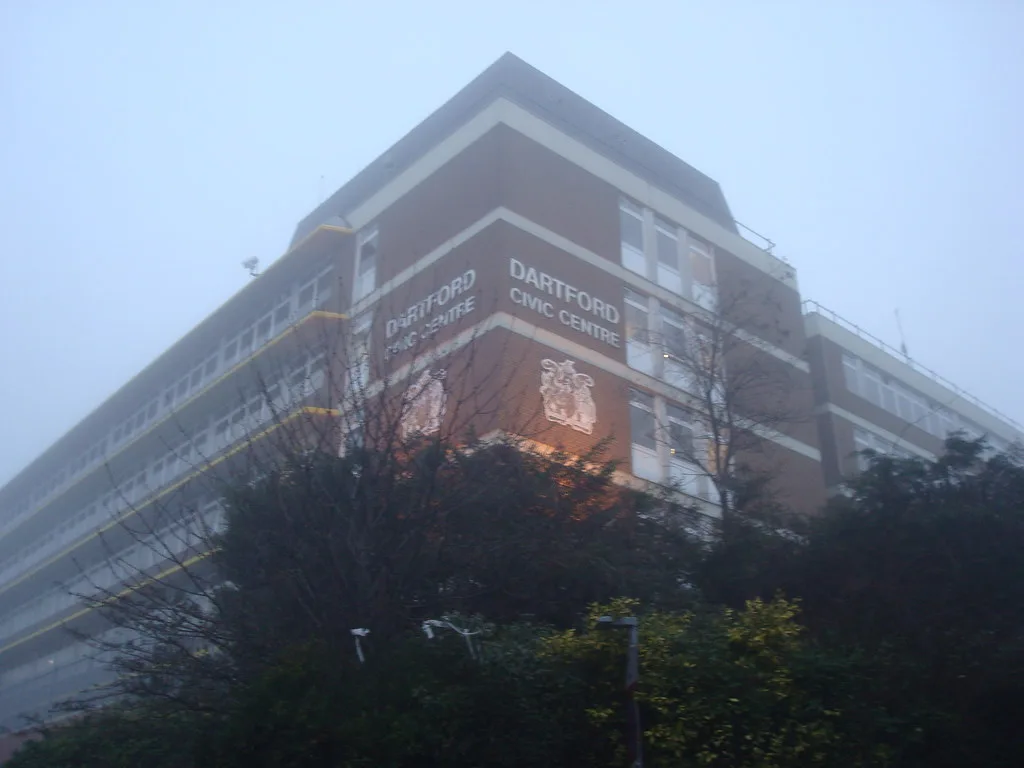
The meeting is at 7pm on Monday 12 October in the Council Chamber at the Civic Centre, Home Gardens. The agenda is marked provisional (agenda, Dartford Borough Council).
Sources
- Dartford Borough Council: Government changes to planning committees and national scheme of delegation, report to the General Assembly of the Council, 12 October 2026 (recommendations, committee size and make-up, Schedules 1 and 2, the Gateway Test, triage criteria, the 98.7% figure, public speaking, judicial review risk)
- Appendix C: Protocol for public speaking at Planning Committee (registration, speakers and written statements)
- Appendix E: Comparison of existing and proposed delegations (the current more-than-five-objections rule and the council’s comments)
- Appendix F: Triage system process note
- Agenda: General Assembly of the Council, 12 October 2026 (time, venue, provisional status)
Have your say