
Dartford adapted 85 homes with disabled facilities grants last year, three times as many as two years earlier. Who qualifies, the £30,000 cap and how to apply.
Dartford Borough Council paid for 85 disabled people’s homes to be adapted in 2025-26. That is three times as many as two years earlier, when 28 were completed.
The council also says it has no waiting list for the grants, and that there has been enough money to meet demand so far.
The figures come from a briefing to the council’s Overview and Scrutiny Committee on Tuesday 10 November. (Disabled Facilities Grants briefing, Overview and Scrutiny Committee, 10 November 2026)
What the figures show
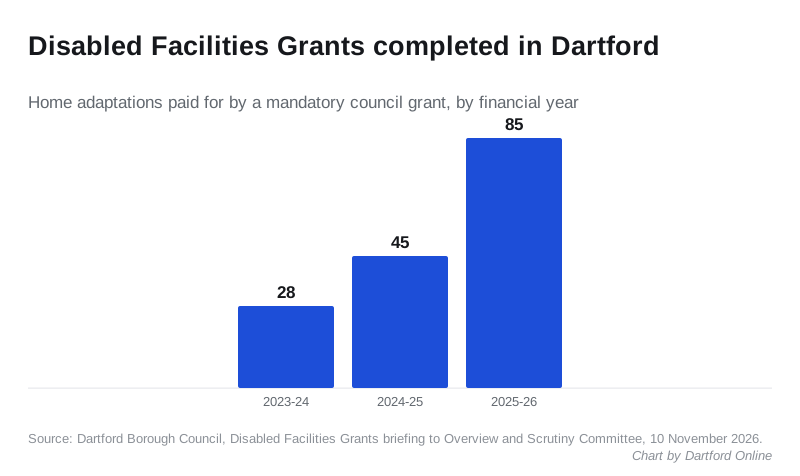
Most of the growth came from older residents. Grants completed for people aged 66 and over rose from 13 in 2023-24 to 62 in 2025-26.
In 2025-26 the council also:
- approved 63 grants, up from 38 two years earlier
- cut the average wait at the stage between assessment and a formal application from 110 days to 90 days
- completed 25 grants for private tenants, up from three
- spent £785,312 of its £848,188 government allocation on these grants and related help
The most common jobs last year were:
| Adaptation | Homes, 2025-26 |
|---|---|
| Bathroom adaptations, such as level-access showers | 46 |
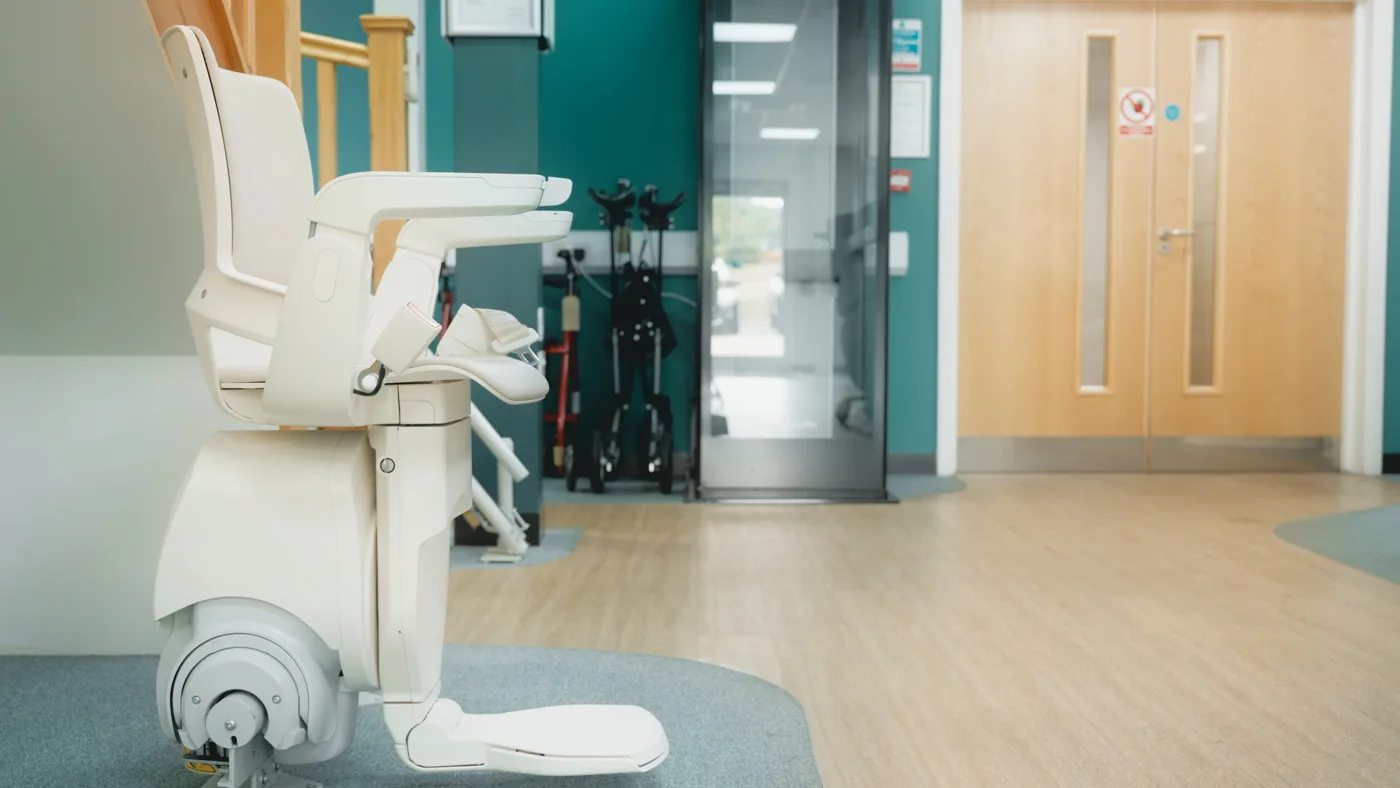
| Stairlifts | 20 |
| Other indoor adaptations | 20 |
| Ramps | 9 |
| Door widening | 2 |
| Lifts | 2 |
| Kitchen adaptations | 1 |
The council also funds a full-time occupational therapist on secondment from Kent County Council. It says the post is there “to prevent delays arising from KCC’s waiting lists”.
Who can get a grant
A Disabled Facilities Grant is a mandatory grant. The council has to pay it to anyone who qualifies, whether or not it has budgeted for them.
You can apply if you, or someone living with you, has a long-term disability. That can be a physical illness or injury, sight, hearing or speech problems, a mental health condition or a learning disability. The disabled person must intend to live in the home for at least five years, or a shorter period if their health means that is unrealistic.
It is open to:
- owner-occupiers
- private tenants, or a landlord applying for a tenant
- housing association tenants, who are advised to ask their landlord first about smaller jobs
- people living in a caravan or houseboat
Parents or guardians can apply for a disabled child.
An occupational therapist assesses what is needed. The council then checks the work is necessary and practical for the home.
How much you can get
The most the grant will pay is £30,000, including fees.
It is means-tested on the income and savings of the disabled person and their partner. Savings over £6,000 count. Other people in the household are not assessed.
You pay nothing towards the work if you receive:
- Universal Credit
- Housing Benefit
- Guarantee Pension Credit
- income-based Employment and Support Allowance
- Income Support
Grants for disabled children and young people under 19 are not means-tested.
If you own your home and the grant is over £5,000, the council registers a charge on the property. If you sell within 10 years of the work finishing, it can ask for back the amount above £5,000, up to a maximum of £10,000.
How long it takes
By law the council must tell you whether the grant is approved within six months of applying. The work then has to be done within 12 months of approval.
The grant is paid either in instalments as the work goes on, or in full when it is finished. The council normally pays the builder or agent directly.
How to apply
Call the council’s Private Sector Housing Team on 01322 343152. Its housing grants page links to the full policy and to the Adapt My Home self-assessment.
The council recommends using an agent, because the process is complex. Its home improvement agency is Town and Country Housing, which can fill in the application, find contractors and oversee the work. Agency fees can be paid from the grant. (Advice on adapting your home)
Council tenants follow a different route, because their adaptations are paid for from the council’s housing budget, not the grant. The council adapted 31 of its own homes this way in 2025-26. Its repairs and adaptations page says to contact Kent County Council’s Occupational Therapy Bureau first, on 03000 416161.
What it means for you
- If climbing the stairs or getting into the bath has become hard, you may be entitled to help, and there is no queue to join in Dartford.
- If you are on Universal Credit, Pension Credit or Housing Benefit, the grant should cover the whole cost up to £30,000.
- Help for smaller problems is available too. The council can fund repairs, equipment, deep cleaning or heating for people whose health is at risk, where that keeps them out of hospital or gets them home sooner. That help depends on the budget available.
Have your say