
518 Dartford households were in council temporary accommodation at the end of June, up from 433 a year earlier. 219 were placed outside the borough.
518 households were living in Dartford Borough Council’s temporary accommodation at the end of June 2026. A year earlier the figure was 433. That is a rise of 20 per cent.
352 of those households had children or were expecting a baby.
The figures are in the council’s housing report for April to June, which went to Cabinet on Thursday 24 September. (Housing Service Update Report Quarter 1 2026-27, Appendix A)
The numbers
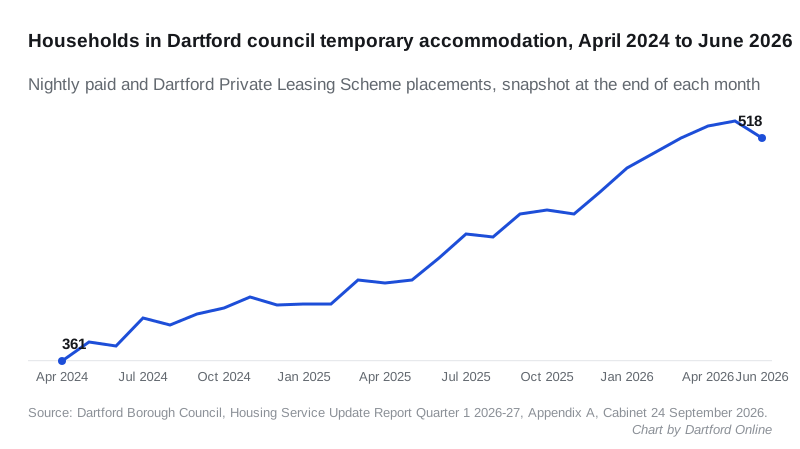
The total has risen almost every month since the council’s series starts in April 2024:
- April 2024: 361 households
- June 2025: 433 households
- May 2026: 530 households, the highest in the series
- June 2026: 518 households
The total combines two kinds of placement. Most are nightly paid, where the council books rooms or flats by the night. The rest are in the Dartford Private Leasing Scheme, homes the council leases from private landlords.
The report’s snapshot for 30 June breaks them down:
| Households | With children or pregnant | Children | |
|---|---|---|---|
| Nightly paid | 385 | 258 | 505 |
| Private leasing scheme | 138 | 87 | 160 |
That is 665 children living in temporary accommodation arranged by the council. The two rows add up to slightly more than the 518 in the monthly series. The report does not explain the difference.
More than 200 households placed outside the borough
The council counted 219 households in temporary accommodation outside the borough between April and June. It is a new measure this year, so there is no earlier figure to compare with.
The report says a visiting officer has now seen 65 per cent of the people placed out of borough.
Why it is rising
The report gives no single cause, but the other figures point one way:
- More people accepted as homeless. The council accepted a legal duty to 66 households from April to June, against 43 in the same months of 2025
- A longer waiting list. The housing register stood at 1,693 households at the end of June. In June 2025 it was 1,479
- Fewer council homes coming free. 34 council homes were ready to re-let in the quarter, down from 55 a year earlier. Only 36 lettings were made in total
Homelessness applications were steady, at 347 against 355 a year earlier. The rise is in the people the council ends up having to house.
The council’s own auditors raised concerns
Two internal audits of homelessness and temporary accommodation reported in June. Both gave “limited assurance”, the report says.
It lists the problems they found:
- personalised housing plans and case management
- record keeping
- processes that were not clear
The report adds that the audits expect the council to inspect each temporary placement itself to check it is safe. “We cannot do this with the current staffing levels,” it says.
What the council is doing
The council is buying homes to use as temporary accommodation:
- In September 2025 Cabinet agreed a programme to buy up to 50 properties
- Most purchases so far have been part-funded by the government’s Local Authority Housing Fund
- The fund’s fourth round will pay towards 24 more properties between 2026-27 and 2029-30
- So far the council has bid on 9 of those: 6 are bought and 3 are with solicitors
The report also says a “slight rise” in private landlords offering homes is easing some of the cost. Early signs from the Renters’ Rights Act, which took effect at the start of May, are that illegal evictions have not increased.
Council homes: repairs and empty properties
The same report covers the council’s own homes. The key figures for April to June:
- 84.6 per cent of repairs were done on time, against a target of 97 per cent. The council says this figure is provisional
- 55 council homes were empty, compared with 31 a year earlier
- An empty home took 39 days on average to re-let, against a target of 30
- 83 damp and mould cases were reported, 18 of them classed as significant
The council blames the slow re-lets on the condition homes are left in, including rubbish and pest problems.
What it means for you
If you are at risk of losing your home, contact the council’s Housing Solutions team as early as possible. The law gives councils a duty to try to prevent homelessness from 56 days before it happens, and the earlier you ask, the more options there are. Details are on the council’s housing advice pages.
If you are in temporary accommodation and worried it is unsafe, report it to the council in writing. The report itself says the council cannot yet inspect every placement.
Sources
- Dartford Borough Council: Housing Service Update Report Quarter 1 2026-27, Appendix A, Cabinet 24 September 2026: the monthly temporary accommodation series, the 30 June snapshot, the housing register table, performance indicators HPI-3 to HPI-96, the audit findings and the property purchase programme
- Dartford Borough Council: Cabinet, 24 September 2026, agenda and papers
Have your say